
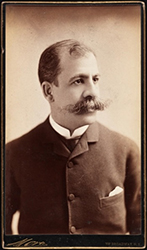

Un siglo antes de que Armand y Narcy fueran conocidos por sus fotografías de artistas y cantantes de su época, otro cubano, José María Mora, figuró entre los principales retratistas fotográficos del siglo XIX. Mora nació en Cuba entre 1846 y 1849 (se desconoce el año exacto). Estudió pintura en París y, al estallar la Guerra de los Diez Años, él y su familia se exiliaron en Nueva York. Allí se convirtió en uno de los fotógrafos más importantes y solicitados de la época victoriana. En su estudio, ubicado en el 707 de Broadway, fueron retratados actores y actrices, cantantes, bailarinas, escritores, jefes de Estado y otras personalidades de la época. Mora falleció en Nueva York el 28 de octubre de 1926, tras varios años de olvido y autorreclusión. Aunque se conservan numerosos ejemplares de su obra fotográfica en importantes colecciones, como la de la Sociedad Histórica de Nueva York, su nombre ha sido olvidado por muchos, incluso por sus propios compatriotas cubanos.
José María Mora: The Forgotten Photographer
A century before Armand and Narcy became renowned for their photographs of celebrities of their time, another Cuban, José María Mora, emerged as one of the leading portrait photographers of the nineteenth century. Mora was born in Cuba between 1846 and 1849 (the exact year remains unknown). He studied painting in Paris and, following the outbreak of the Ten Years’ War, he and his family went into exile in New York. There, he became one of the Victorian era’s most prominent and sought-after photographers. At his studio, located at 707 Broadway, he photographed actors and actresses, singers, dancers, writers, heads of state and other notable figures of the period. Mora died in New York on October 28, 1926, after spending several years in obscurity and self-imposed seclusion. Although many examples of his work are preserved in major museum collections, including the New York Historical Society, his name has been forgotten by many, even by his fellow Cubans.


0 comentarios